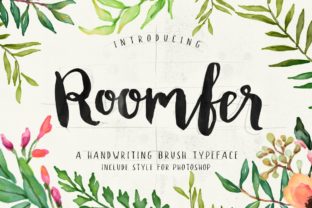
Roomfer: The Organic Script for Inorganic Moments
In the pursuit of flawless digital experiences, there's a counterintuitive element gaining quiet appreciation: the deliberate introduction of roughness. This isn't about poor quality or bugs, but rather a controlled, aesthetic imperfection that mimics the organic variability of the physical world. Enter tools like Roomfer, a script designed not to polish, but to gently weather and texture digital surfaces, adding a layer of human-like irregularity to any design.
Understanding the Philosophy Behind Organic Scripts
Modern interfaces, built with precise frameworks and pixel-perfect grids, can sometimes feel sterile. They lack the subtle inconsistencies we encounter everywhere else—the uneven brushstroke on a canvas, the slight warp in handmade pottery, or the natural fade in a sunset. This gap between digital precision and organic reality can create a cognitive distance for users. The concept behind scripts like Roomfer is to bridge that gap. It operates on the principle that controlled randomness and minor deviations can make a design feel more relatable, comfortable, and authentic.
Rather than seeing perfection as the ultimate goal, this approach views character as a key asset. An organic script doesn't destroy structure; it lives within it, applying a light, variable hand to elements that would otherwise be uniformly rigid. For instance, a grid of perfectly aligned icons might be gently perturbed by Roomfer so each sits with a barely perceptible unique offset, mimicking how a person might place items on a real shelf.
Where Does Roomfer Apply Its Touch?
The application of Roomfer is broad because the desire for natural feel is universal. Consider a website for an artisan coffee roaster. Using Roomfer to apply slight, random rotations to the images of coffee beans on their homepage introduces a tactile, unpackaged feel that aligns perfectly with their brand story of small-batch, hands-on roasting. Conversely, a financial tech app might use it sparingly on background elements to soften its otherwise austere data presentation, making the interface feel less intimidating.
- Typography & Layout: Applying microscopic variations to line spacing, letter spacing, or the baseline of text blocks can make reading feel less like parsing a machine output and more like engaging with written material.
- Visual Components: Icons, buttons, or illustration sets can receive subtle positional shifts, scale variations, or opacity fluctuations to break monotony.
- Motion and Interaction: Animation timings and paths can be given organic variance, so elements don't move with robotic synchronization but with the slight unpredictability of natural movement.
- Data Visualization: Charts and graphs, while remaining accurate, can be rendered with hand-drawn stylistic imperfections to emphasize the human story behind the numbers.
The Practical Advantages of Introducing Controlled Irregularity
Implementing a tool like Roomfer is a design decision with several tangible benefits. Firstly, it significantly enhances brand differentiation. In a market where many sites use the same underlying frameworks and templates, an organic texture becomes a unique signature. It signals that attention has been paid to the experiential details beyond mere functionality.
Secondly, it can improve user engagement and comfort. Psychological studies suggest that environments with some complexity and variability are often perceived as more interesting and less stressful than perfectly uniform ones. A webpage that feels a bit "alive" and imperfect can reduce the subconscious pressure users might feel when interacting with an overly sterile system.
Furthermore, Roomfer aids in directing attention. By making certain elements stand out through their unique organic deviation, designers can guide the user's eye without relying on bold colors or large sizes. It creates a hierarchy of interest based on texture and variation.
Key Considerations Before Implementation
Using Roomfer, or any organic script, requires a thoughtful approach. The primary rule is subtlety. The effect should be felt rather than overtly seen. If the irregularity becomes too pronounced, it risks looking like an error or a lack of skill. It's a seasoning, not a main ingredient.
Another consideration is performance. The script should be lightweight and efficient, calculating its variations in a way that doesn't impact page load times or interaction responsiveness. The goal is to enhance feel, not hinder function.
Finally, context is paramount. An organic feel might be perfect for a creative portfolio, an eco-brand, or a community platform, but it could be inappropriate for a legal document repository or a critical medical interface where clarity and absolute precision are non-negotiable. The designer must assess whether the "natural feel" aligns with the content's seriousness and the user's needs.
Roomfer in the Creative and Professional Workflow
For designers and developers, integrating Roomfer represents a shift in the workflow. It often comes in after the core layout and functionality are established, acting as a finishing layer. Professionals might use it on a component level, applying it only to specific modules rather than the entire page. This allows for granular control over where the organic feel is introduced.
In collaborative environments, it serves as a tool to quickly prototype the "mood" of a design. A team can toggle Roomfer's influence on a mockup to instantly compare a polished version against a more textured one, facilitating discussions about brand personality and user perception before committing to heavy coding.
Educators and researchers in UX design might use Roomfer as a practical case study when teaching about the emotional dimensions of interfaces. It provides a concrete example of how code can influence psychology, moving beyond traditional topics of usability into the realm of affective computing.
The Audience for Organic Design Elements
The appeal of this aesthetic is broad. Consumers often respond positively without knowing why, simply feeling that a site or app is "nicer" or "more interesting" to use. Creators and hobbyists appreciate it because it mirrors the imperfect beauty they seek in their own crafts. Business owners see its value in creating a memorable brand experience that stands out in a crowded digital marketplace.
Even professionals in technical fields can find value when the organic feel is applied to documentation or internal tools, making long sessions of work feel less monotonous and more engaging. The audience isn't defined by industry, but by a shared human appreciation for variety and character.
Observations on Trends and Future Directions
The use of scripts like Roomfer points toward a larger trend in digital design: the rejection of flat, impersonal uniformity and the embrace of digital tactility. As virtual and augmented realities develop, the need for organic variation will likely increase, as those environments strive to feel believable and immersive. Roomfer's principles could extend beyond screen design into the logic of how objects behave in simulated spaces.
Furthermore, as AI-generated design becomes more prevalent, the human touch becomes a稀缺 commodity. Organic scripts offer a way to reintroduce a semblance of human inconsistency into systems that might otherwise feel too predictably algorithmic. They act as a counterbalance, preserving a sense of artistry and individual expression.
In practice, observing projects that utilize Roomfer reveals a common pattern: they often pair the organic script with otherwise highly structured content. This creates a compelling tension—order infused with life—that is visually and experientially dynamic. It demonstrates that professionalism doesn't have to mean perfect symmetry, and that usefulness can be wrapped in an inviting, natural feel.
Ultimately, Roomfer and similar tools are not about making things look old or worn, but about making them feel present and authentic. They answer a subtle user need for interfaces that resonate with the irregular, beautiful patterns of the world outside the screen. By allowing for roughness within the rules, they create digital spaces that are not only functional, but also genuinely relatable.